Musing All musings
Nobody asked me to build anything
The question I get at work changed from "can AI do this" to "how do I use the thing we already bought." The bottleneck moved from capability to habit, and I have my own numbers to prove it.
On this page
Somewhere around February the question people ask me at work changed.
For a long time the ask was a version of “can it do this.” Can it read a spec section. Can it check a sheet index against the last issue. Can it write a first pass of an email to a consultant. Those were capability questions, and I liked them, because answering one meant building something.
Then people mostly stopped asking, and it had nothing to do with losing interest. The answer stopped being in doubt. The models got good enough over the winter that “can it” resolved quietly to “yes, mostly,” and the question underneath came up for air: what am I supposed to do with this.
My evidence is a little embarrassing. The thing I made this month was not a system. It was a dictionary. One hundred and eight definitions of AI words written for people who design buildings, because colleagues kept stopping me in hallways to ask what a word meant and I kept giving the same eight answers. A year ago I would have guessed wrong about what people needed. The dictionary is the thing that got used.
The license showed up before the plan did
This is not only happening to me. Anthropic saw an increase in enterprise usage recently. Whatever else that means, it means a lot of organizations bought seats over the last eighteen months.
Buying seats is one decision. Deciding what the seats are for is a slower and separate one, and in most places it has not happened yet. So the tool lands in an office with no policy covering it and no shared idea of what good use looks like. Everyone gets a login and nobody gets an instruction.
The survey numbers say the same thing from the other side. Chaos asked more than 1,200 architects about AI this year: 64 percent had experimented with it, and 20 percent said they had actually folded it into how they work. Two thirds have touched it. One fifth have changed anything.
Three offices inside one office
What that gap looks like up close is three groups of people who barely resemble each other.
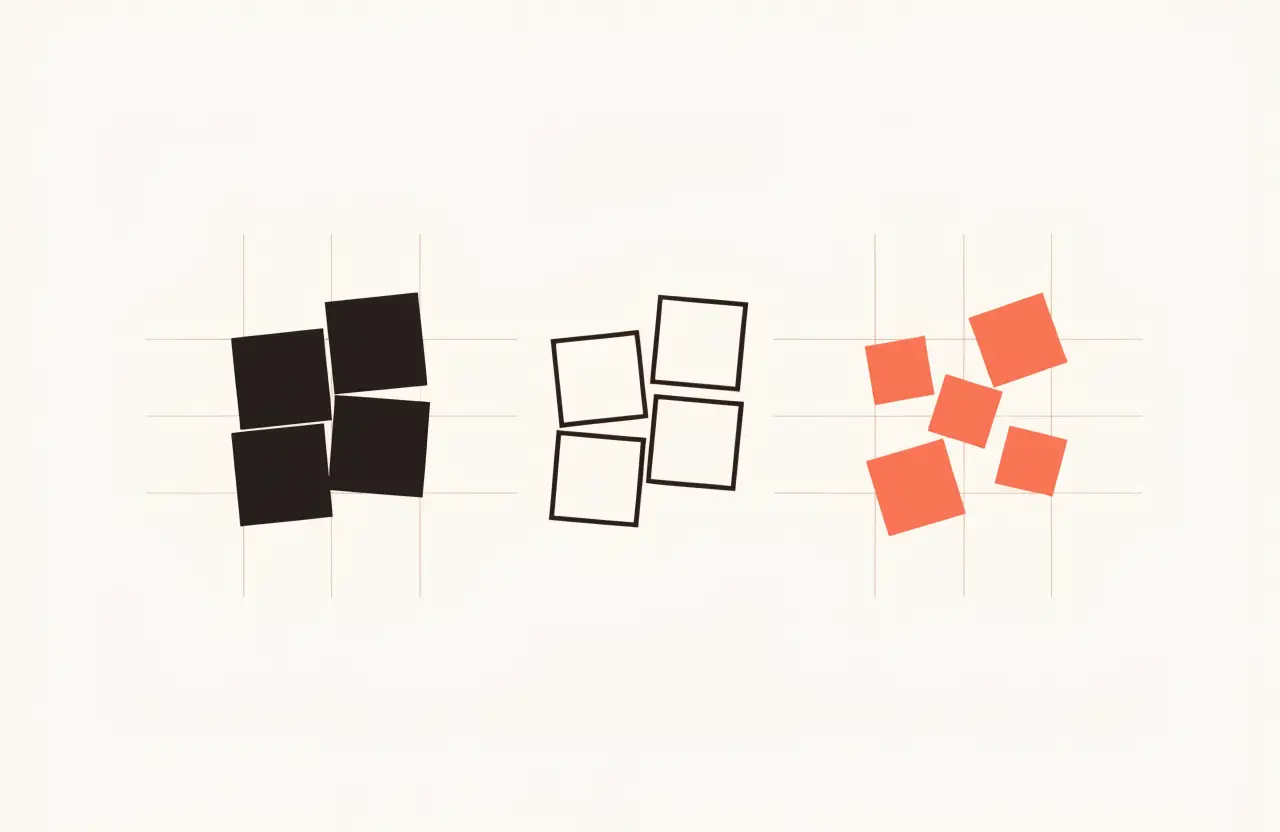
One office, three ways of working: packed in, holding back, and busy producing things nobody checked.
There are heavy users. They are working through an enormous amount of text and appear to be getting a lot done, though nobody can say how much, because there is no measurement for it and the work does not show up anywhere as a line item.
There are people who will not touch it, and mostly they have no objection to it. Nobody told them whether they are allowed to, and in the absence of a rule the safe move is to do nothing. I used to read that as resistance. It is closer to a reasonable person reading an empty policy and drawing the obvious conclusion.
Then there is the middle, which is where the trouble lives. People using it for small things and producing documents that are fluent, confident, and wrong often enough that someone downstream has to check all of them. The output looks finished, which is exactly the property that makes it expensive. A rough draft announces that it needs review. A polished one does not.
That middle group is the reason “we use AI” is a useless sentence. It describes the heavy user and the person producing unverified reports equally well.
The number that actually convinced me
I could have written all of the above as observation about other people. What changed my mind was measuring myself.
I keep a working log of what I do across sessions, so that when I pick a project back up I know where I left it. Writing that log is a two-minute habit. I believed I was doing it consistently. Last week I built an audit that checks the log against the days I actually did work. Only about 30 percent of my working days had an entry.

About one working day in three got the two-minute habit.
I want to be clear about how small a claim that is. It measures one person’s note-taking discipline, not an office’s adoption of anything.
It came back at thirty, which told me the bottleneck was never the tool. Doing the useful thing every single time is a habit, and I did not have it.
That reframed the whole problem for me. I had been treating adoption as a downstream consequence of building something good enough. It is the other way around. The habit is the hard part, and the tool is the easy part, and I had the ratio backwards for about a year.
What I do differently now
Start with the smallest thing that can be seen working, and pick it for visibility rather than leverage. Something that saves half an hour and that a skeptical person can watch happen from beginning to end. The half hour is beside the point. What it buys you is that someone now has a picture of what this could do inside their own work, which no demo of somebody else’s workflow has ever managed.
We need to stop counting logins. The number that matters is how much of the actual work this is inside of, which in my case, honestly counted, was a lot smaller than the comfortable number.
Where I might be wrong
The 30 percent could be a story about me rather than about anything general. I am one person with one habit, and it is possible the audit measured nothing but my own inconsistency.
I also think there is a version of “start small” that never gets anywhere. Half-hour wins can become the whole program, and an office can spend two years feeling productive while the real translation work, the repeating of one idea in six different forms for six different readers, goes untouched. Small first is an argument about sequence, and it only holds if the second step actually arrives. Where it never does, the first one was theater.
I would still rather have the small proof and the argument about what comes next than a large system nobody uses.
shoots.