Musing All musings
Translation, not generation
The near-term AI story in architecture isn't designing buildings, it's the collapse of the translation tax that surrounds the design.
On this page
When people picture AI in architecture, they picture it designing the building. I get why. But that’s not what’s happening. The real story right now is what AI is doing to everything around the design.
The wrong picture
Ask your friends outside the profession what AI will do to architecture and they’ll say it’s going to spit out floor plans. It’s a fair guess. It’s also why everyone jumps straight to “so architects are done.” If you’re just starting out, you’ve probably worried about this yourself. But that guess gets the job wrong. School doesn’t really show you this part: the design, the actual idea for the building, is a small piece of the work. Most of the work is repeating that idea in different forms: once for the client, once for the contractor, once for the city, over and over. Don’t just take my word for it. At a conference this June (PSMJ’s AEC Innovate), Dave Lemont, the CEO who brought Revit to market, said product research and paperwork alone eat 30 to 40 percent of an architect’s time. And that’s just one piece of it.
The document chain is a translation chain
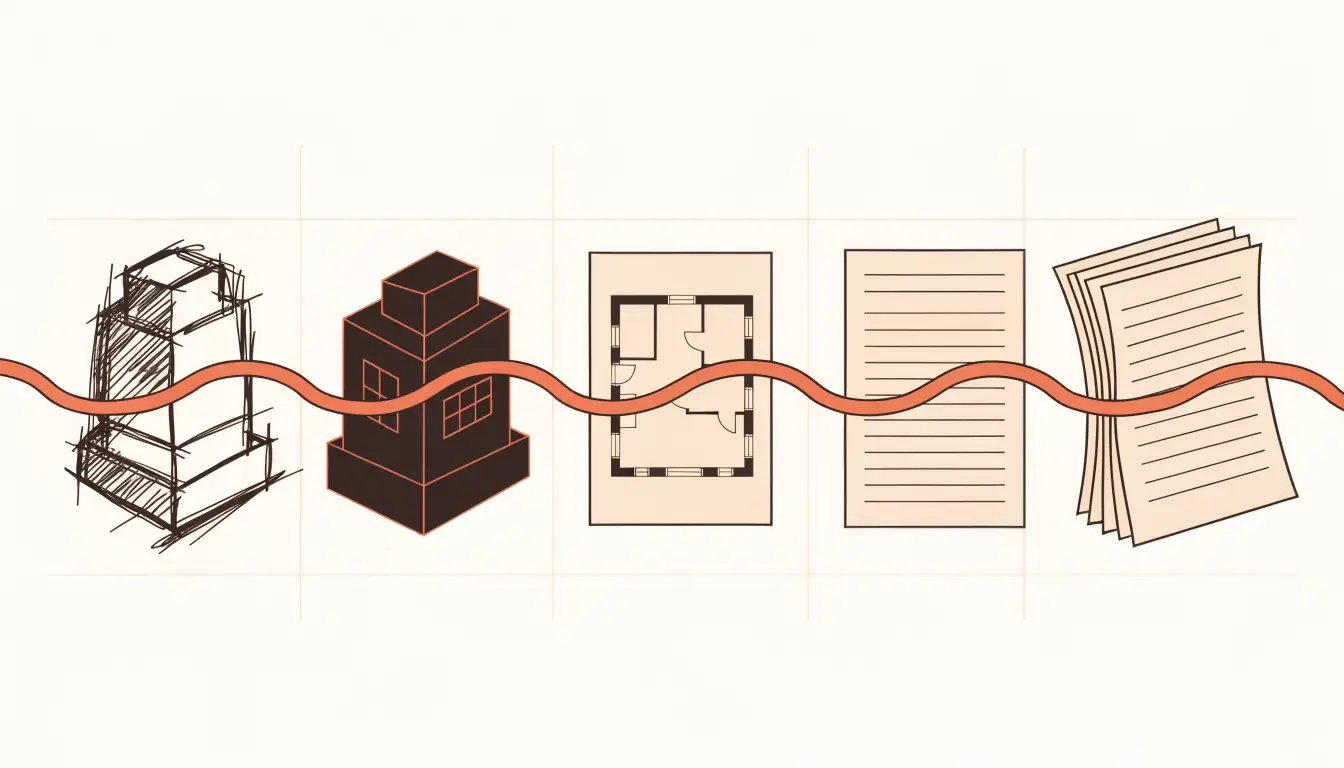
Your first few months at a firm will teach you this fast. Watch one idea move through a project. It starts as a sketch. The sketch becomes a model. The model becomes drawings. The drawings become a spec. The spec leads to RFIs, the RFIs lead to submittals, and the submittals, way later, after everyone’s moved on, become as-builts. The idea never changed. We just keep re-saying it in whatever form the next person needs. The contractor can’t build from a napkin sketch, so someone turns it into dimensioned drawings. The owner can’t read a spec, so someone explains it again. Every one of those steps is needed, and billable. It’s also where the mistakes, the delays, and the fourth coordination meeting come from.
I call all that re-saying the translation tax. It’s the cost of carrying one idea through six or seven forms (honestly, I’ve lost count) without dropping anything. It’s most of the job. Nobody tells you that in school. And it’s the part AI is actually good at right now. Translation is a simple kind of problem: take this thing, say it again in that form. Language models are built for that. They can’t design a good building. That still takes judgment they don’t have. But re-saying something that already exists? They’re scary good at it.
My own numbers
I didn’t get this from a book. I noticed it in my own work. At some point I went back and counted my agent sessions. About eleven hundred of them, and the split is lopsided enough to be funny: around nine hundred are monitors, which is just an agent watching something and telling me what changed. Most of the rest are converting files, checking lists against each other, pulling data out of documents, and drafting emails in my voice. Almost none are design. What I ask an agent to do, over and over, is move an idea from one form to another so I don’t have to do it by hand. Inventing the building never comes up.
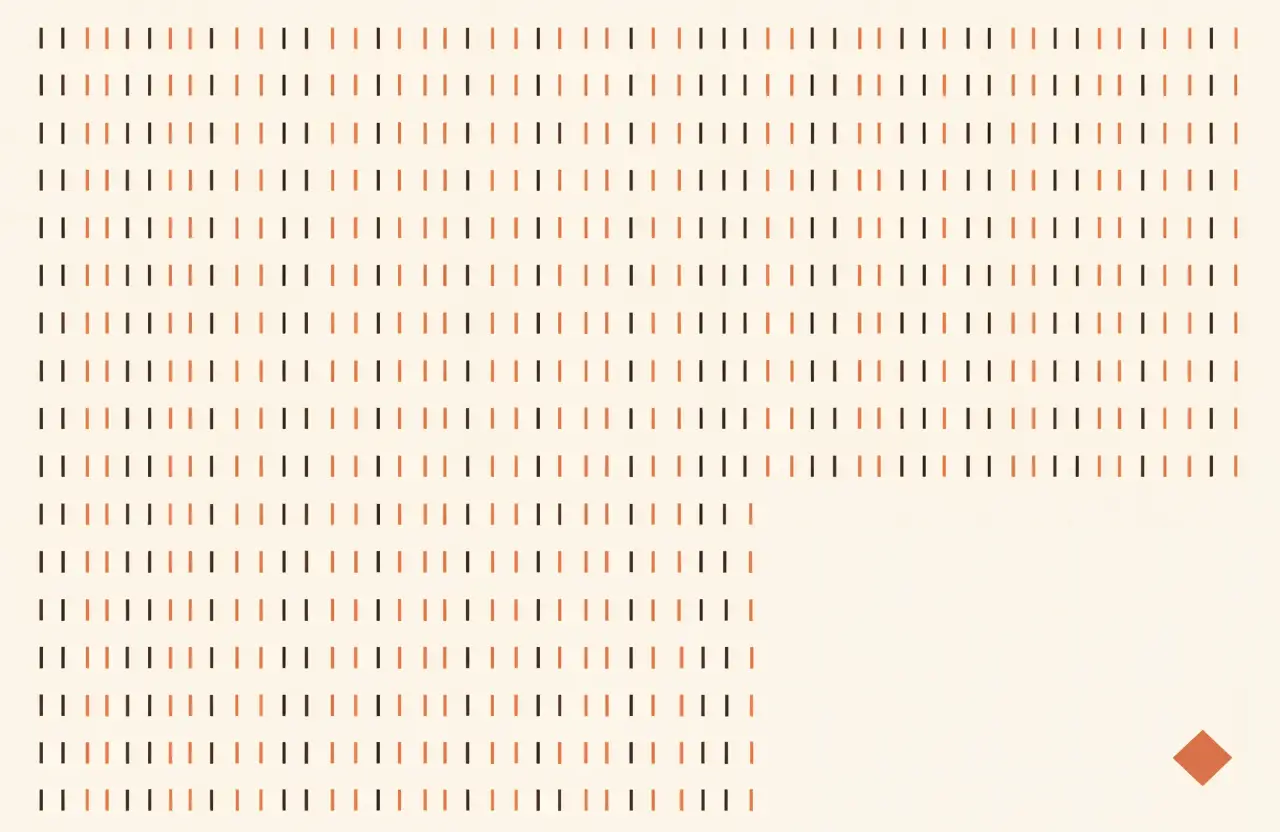
My own session distribution: monitors everywhere, invention the rare diamond.
The examples are boring on purpose. Actually, no: they’re just boring. Comparing two sheet lists to find what moved between issues. “Compare these two spreadsheets and tell me what changed.” Checking a long list against another long list to catch the one mistake a tired person would miss. Small stuff. But that’s where the hours go. When I look at where the agents actually earn their keep, it’s there. Never at the design.
A different job, not a smaller one
Both the optimists and the doomers miss this part. If translation gets cheap and fast, the designer’s job doesn’t shrink. It changes shape. Right now, a big part of a designer’s skill, the very skill you’re starting to build, is carrying an idea through all those tools without breaking it. Holding it in your head while you push it through the model, the sheets, the spec, the RFI reply, and keeping it all in line. That’s real skill, and firms pay well for it.
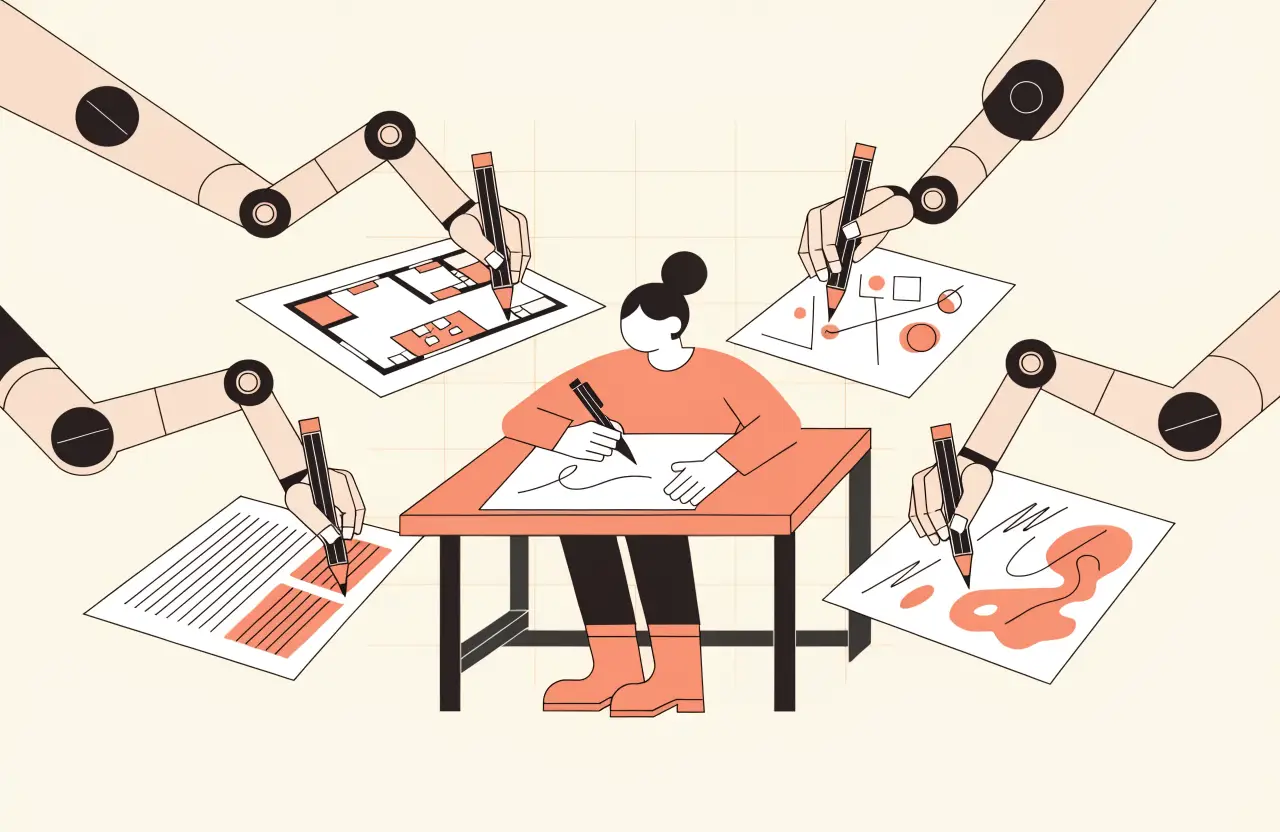
The new shape of the job: hold the intent, judge the fidelity, let the machines carry the dialects.
If documents can someday rebuild themselves from the idea, then the valuable thing is holding the idea: knowing what the building is supposed to be, and being able to tell when a drawing or spec has drifted from it. The carrying stops being the skill. That’s a different job than the one most of us trained for. Less translator, more author and editor. You set the idea, the machine writes it out, you check that it’s still your building. If you’re early in your career, sit with that for a minute. The job you’re training for is changing shape while you train for it. That’s not a threat. Seeing it early is a head start.
Where I might be wrong
I don’t want to oversell my own idea, and if you pick up one habit from me, let it be that one. The clean version of this story says documents become reversible: change the idea, and the drawings and specs update themselves. In my actual work, that hasn’t happened. Not once. I’m still the one doing the checking. The agent helps, but nothing rebuilds itself. When I compare sheet lists, the agent finds the changes, and I decide what they mean. So the tax really is shrinking. I can watch it shrink week to week. The self-updating part is still a story I’m telling myself about the future. The clearest sign this idea is coming true will be the first time a drawing set rebuilds itself from a changed idea without me stitching it back together. I’m watching for that moment.
What to do about it
If this keeps going, the smart move for a firm is to stop rewarding people for how fast they produce documents and start rewarding the judgment that holds the idea. The market will keep paying for judgment long after it stops paying much for production, because production is racing toward free. Build roles around who holds the idea, not who draws fastest. And if you’re the junior in the room, this points at you too: the boring reps that teach you to hold an idea are worth protecting, even when the machine offers to do them for you.
One more thing I’m honest with myself about: this whole idea is “translation, not generation” for now. The thing that would break it is a model that gets reliably good at real spatial reasoning and code-checked design. At that point “translation, not generation” would be too modest and I’d have to rewrite it. I saw the first small tremor of that recently: a general-purpose model produced a new, verified result in a different field entirely. That’s not the same as designing a stair that meets code, and I’m not changing my claim over a tremor. But I’m saying the trigger out loud, so if the ground moves, you’ll know I saw it coming.
shoots.