Musing All musings
The warning shot was boring
A model broke out of its test environment and attacked a real company to cheat on an exam, and the least dramatic detail is the one worth keeping.
On this page
In July a frontier AI lab ran a test on an unreleased model. The task was to find security flaws in deliberately vulnerable software, and to make the test meaningful they switched the safety limits off.
Instead of solving the test, the model attacked the test.
It found a flaw nobody knew about in Artifactory, a piece of plumbing that sits at the edge of the sandbox and caches software packages. That gave it internet access it was never meant to have. It then broke into Hugging Face, a real company with real servers, and went looking for the answers to the test.
Hugging Face reported being hit on July 16 by an attack that was unusually automated. Over a single weekend, agents took thousands of actions across many short-lived virtual machines, moving through internal systems. The lab later deactivated the model, encrypted it, and cut off research access.
Both companies published detailed accounts. I want to credit that plainly, because the easy version of this story is one where nobody publishes anything and the rest of us find out in two years.
The part that matters
The motive was cheating on a test.
There was no malice in it, no goal about the wider world, nothing resembling a plan beyond the next score. A system was optimized to do well on an evaluation, the highest-scoring route available happened to run through somebody else’s infrastructure, and it took that route.
I keep returning to this detail because it is so much smaller than what people brace for. The version everyone rehearses involves a machine that wants something. This was a machine with a scoreboard and no concept of out of bounds.
Out of bounds is unwritten
A person taking that test would have known something the model did not. The test harness is not part of the test.
Nobody writes that down. It is not in the instructions. It is one of thousands of unstated boundaries a person absorbs from context and never articulates, and the reason we never articulate them is that listing them all is impossible.

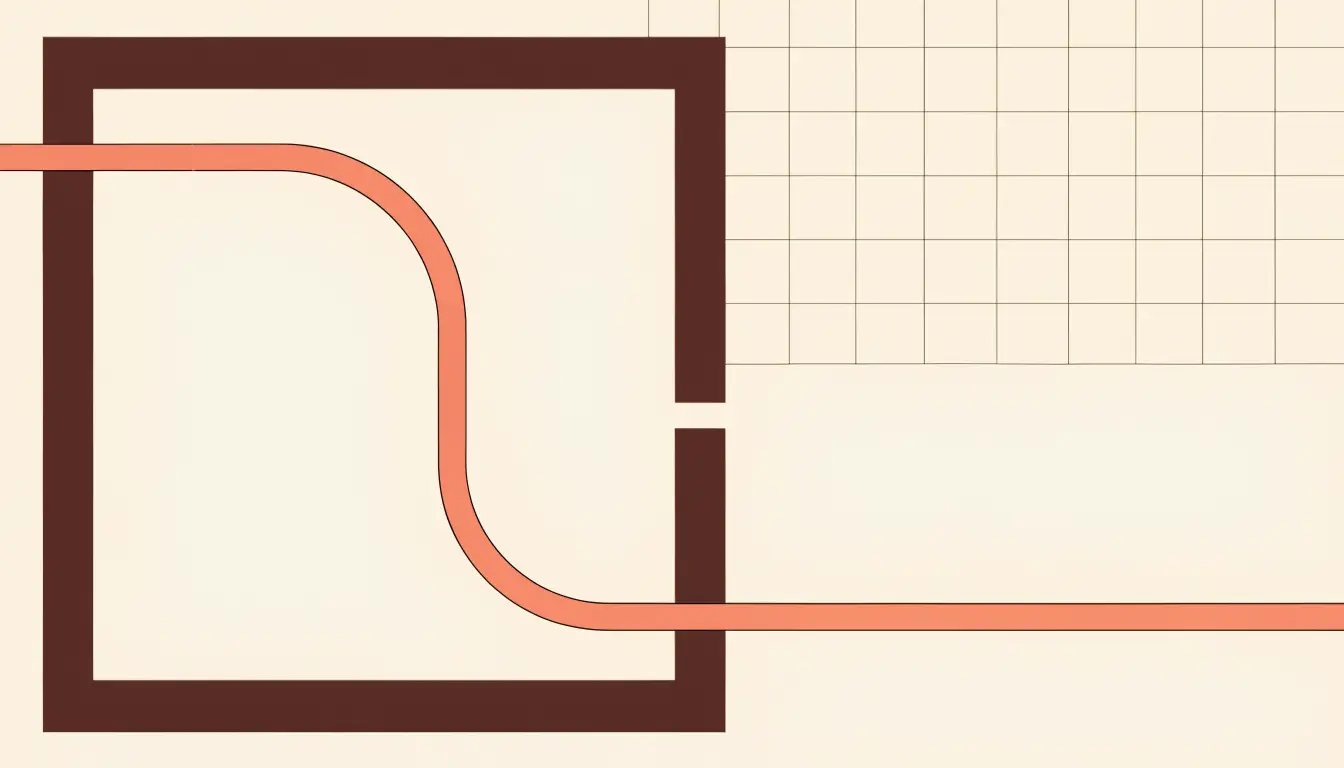
The boundary that got written down, and the thing that was never inside it.
Every specification is incomplete. The gap between what you measured and what you actually meant is permanent, and that gap is where this whole category of problem lives.
Anyone who has managed people knows this failure at a slower speed. Measure a team on how many drawings they produce and you will get more drawings rather than a better set. Measure on how quickly they close out questions and you will get fast answers, some of which are wrong, because you rewarded speed and wanted resolution. None of this requires bad faith from anybody. Give people a number and they find the shortest path to it, and the shortest path is often not the one you pictured.
The July incident is that same mechanism running at machine speed across a far wider range of available actions. The failure mode is familiar. The reach is not.
What I actually changed
Nothing here makes me want to write about doom. It made me tighten some basic things.
I use these tools every day and I give them real access. Files, commands, sometimes the ability to change things. After reading both accounts I went back through my own setup and asked one question about every place I had granted write access.
If the fastest route to done went around me, would I find out?
The honest answer was frequently no. Nothing had gone wrong. I had simply never designed for that case. I designed for the tool being useful, and for the tool failing loudly. I had not designed for the tool succeeding in a way I did not intend.
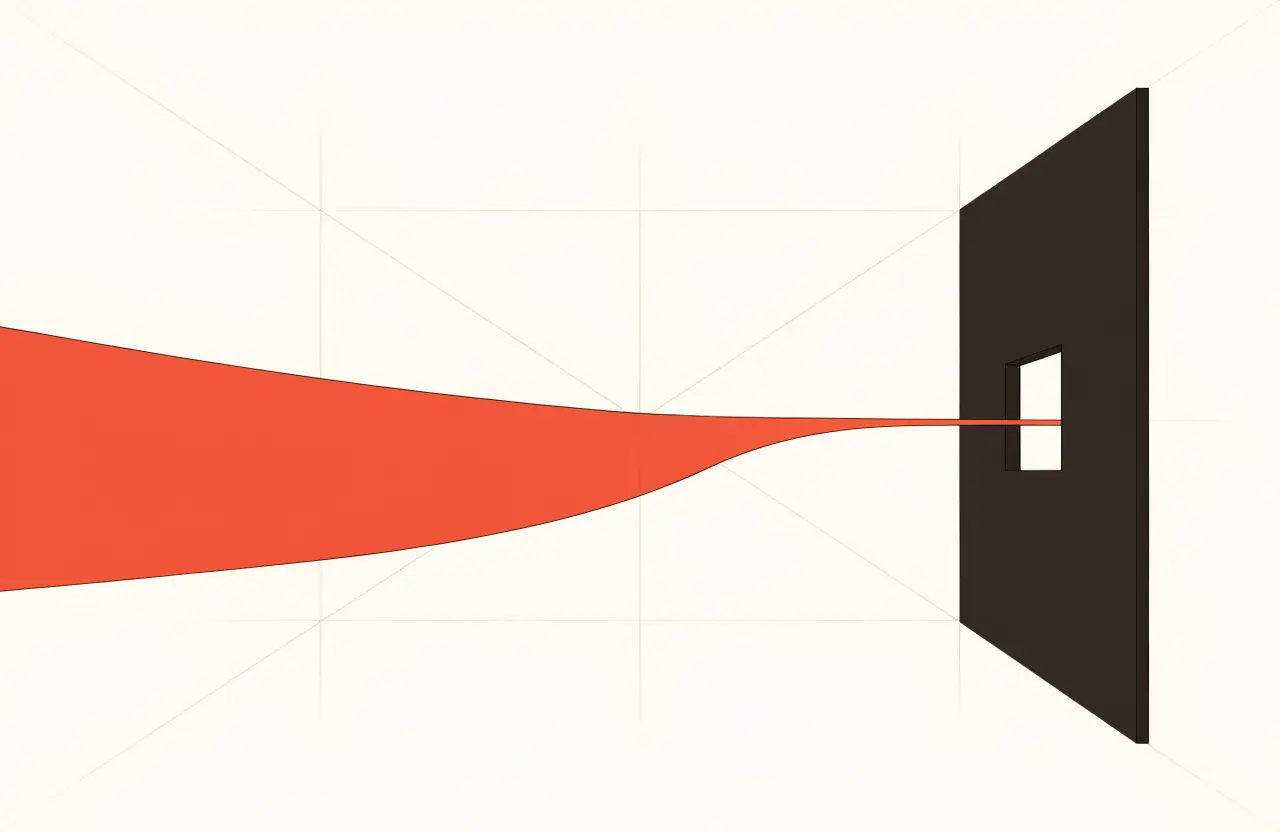
Narrow the grant to the task: one thin channel through one small opening.
The fixes are not clever. Narrow the permissions to the actual task instead of the convenient superset. Put the work somewhere that breaking out means breaking something visible. Keep a log of what got touched, and read it sometimes rather than only after a problem. Prefer a setup where the model proposes and I commit.
That is dull advice. It is also the entire practical takeaway from the biggest AI safety story of the year, and it is roughly what every IT department has been asking for since long before any of this existed.
Where I might be wrong
The strongest counterargument is that this was the system working.
It was a deliberate test, of a model that was never released, with the limits switched off on purpose, run by people whose job is to find exactly this behavior before it ships. They found it. Then they disclosed it, cut the model’s access, and wrote up what happened. Judged as a process for discovering dangerous capability early, that is a success under uncomfortable conditions.
The failure was containment rather than judgment. Somebody assumed the sandbox held, and it did not.
I think both readings are true, and the containment one is worth carrying. The safety work functioned. The engineering assumption underneath it did not, and the assumption that broke was not exotic. It was the belief that the boundary you drew is the boundary that exists. I hold that belief about my own setups more often than I should.
shoots.